In this guide
A service update can reach the main webpage before it reaches a translated handout, a counter sheet or a saved email reply. Staff may then give different answers while each believes they are using an official source. A version check makes the content trail visible and identifies which materials need authorized review.
Define the changed instruction
Start with the exact change: a contact route, a document requirement, a location or a program stage. Avoid describing the whole service as changed when only one element differs. The narrower description helps the content owner identify affected versions.
Phoenix's public language-access materials and department-specific Housing and Neighborhood Services resources show why more than one version or format can exist. This article does not prescribe an internal publishing workflow. Actual revisions should follow the department's approved content, translation and accessibility process.
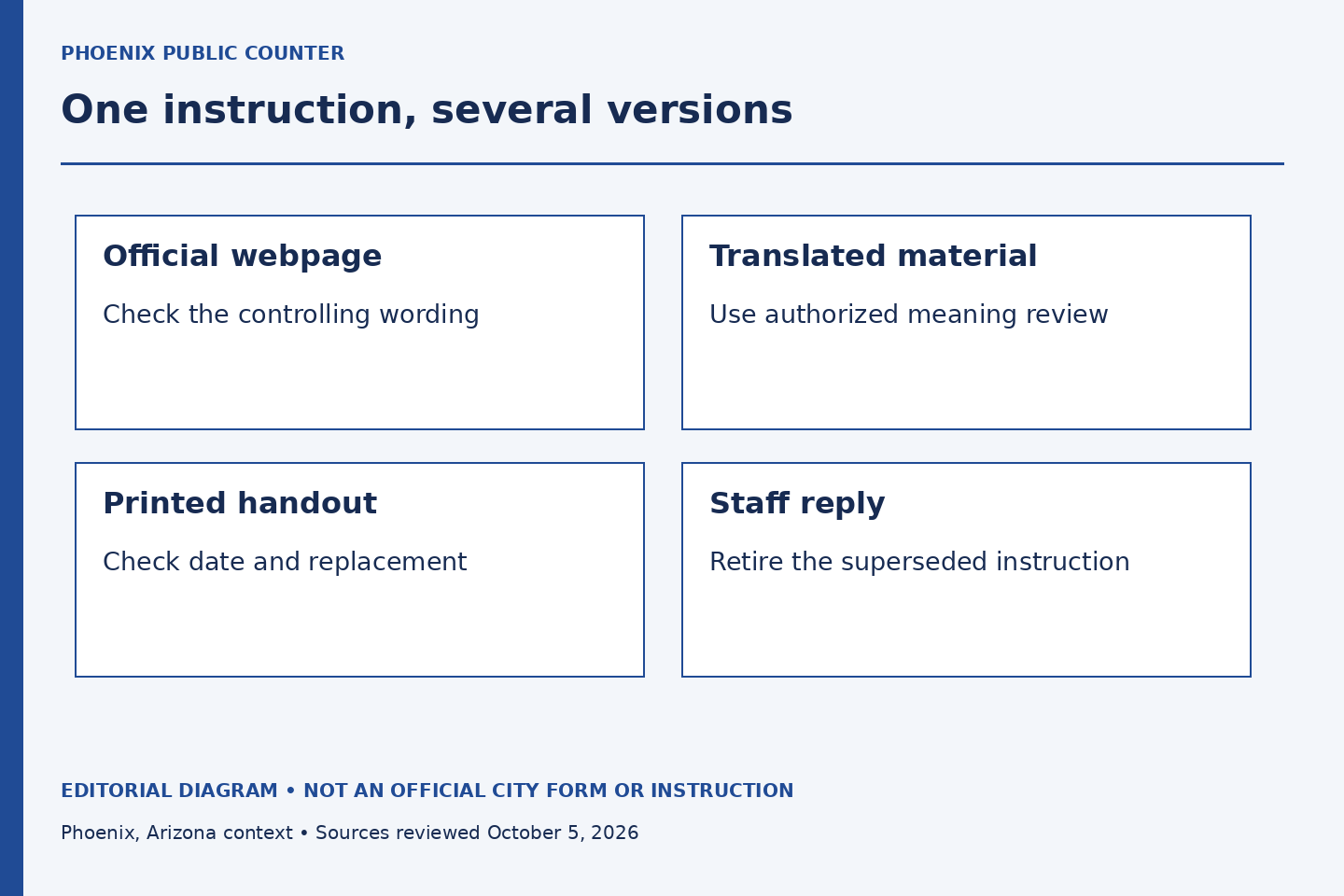
List where the instruction appears
For a fictional exercise, identify the official webpage, a printed handout, a translated copy and a standard reply. Record each item's title, date or version and owner if known. Do not search private employee files or copy confidential correspondence into a training worksheet.
The list is useful because a content change is not complete merely when one file is edited. A staff member can flag an outdated version without claiming authority to replace every copy. The next step belongs with the responsible content owner.
Compare meaning, not just layout
A translated document can look current while retaining an old instruction. A reformatted handout can drop a qualification that matters. Review the affected content through the appropriate qualified process rather than assuming that matching colors and logos prove consistency.
Do not use a machine translation or an unassigned colleague's quick suggestion as an official replacement. The exercise should produce a clear review request with the source version and changed passage. It should not bypass the checks required for public material.
Mark the old route so it does not return
When authorized staff publish a replacement, follow the approved process for removing or marking superseded copies. A personal folder labeled “final” can reintroduce old information months later. Keep the source location in staff reference notes instead of relying solely on an attachment.
The learning outcome is a more reliable update question: which versions carry this instruction, who can approve the change and how will staff know what is current? That question supports consistent service without pretending that this publication controls City content.
Sources and limits
Official public sources checked October 5, 2026. Examples and exercises are original editorial illustrations, not City records or instructions.
- City of Phoenix Language Access Plan
Citywide public planning principles; department-specific implementation must be confirmed. No legal advice.
- Housing Public Notices, Reports and Brochures
Housing program documents, language-access and accommodation resources. No benefit or housing eligibility determination.
- Your Voice: Citizen Notification and Participation
Public participation and department language-assistance information; does not establish citywide service availability.