In this guide
Language assistance works best when staff know the approved route before an unfamiliar request arrives. A municipal employee should not have to improvise who can interpret, which document is current or how to explain a delay. The preparation is organizational as well as conversational: know the process, use the right resource and keep the resident's task in view.
Phoenix's public Language Access Plan discusses planning for people with limited English proficiency and people who are Deaf or hard of hearing. Department-specific materials also exist, including Court interpreting resources and Housing language-access information. These sources provide context; this article does not establish the procedure for every department or offer a legal compliance determination.
Learn the approved arrangement, not just a phone number
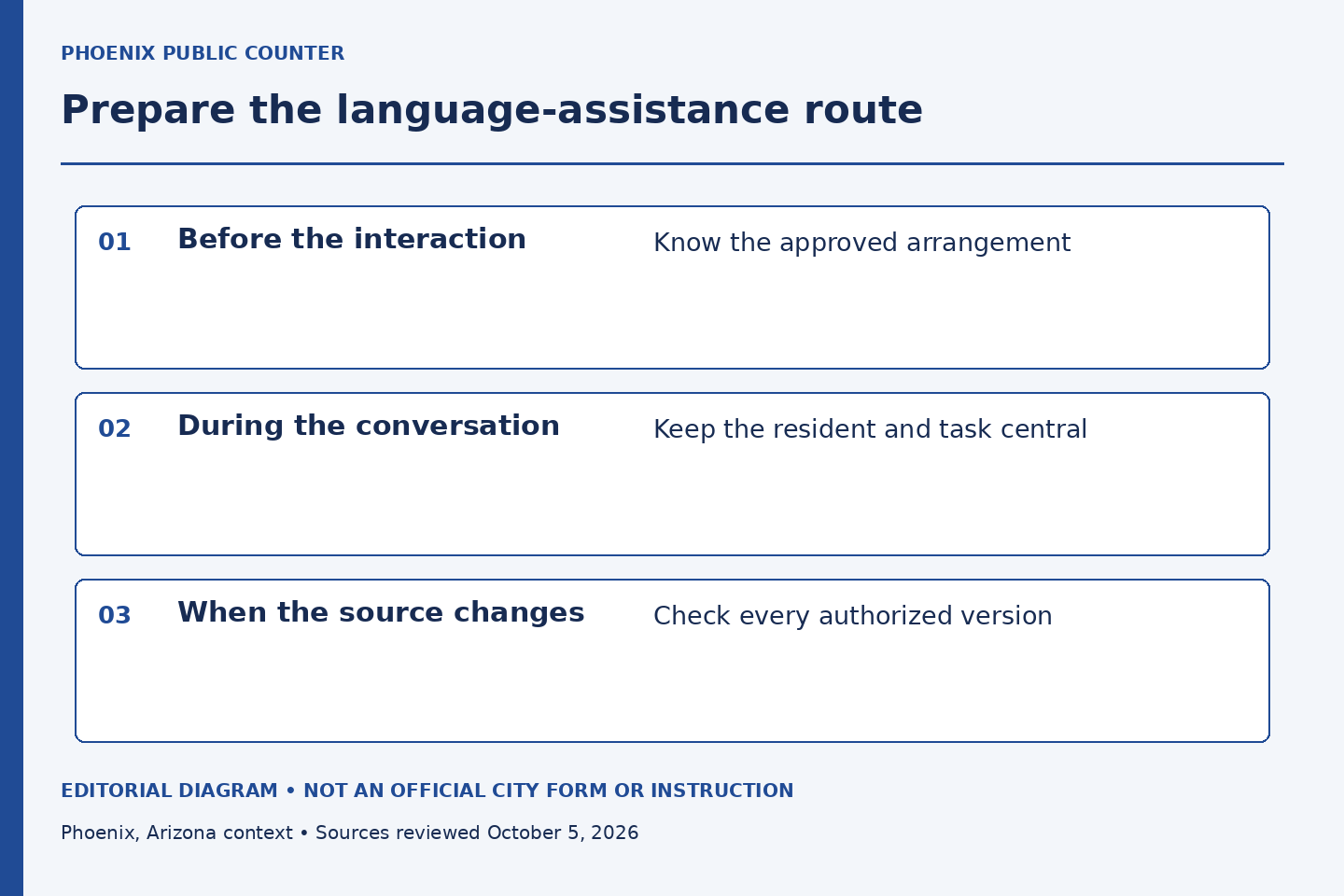
Before a shift or training exercise, ask the responsible supervisor where the current language-assistance instructions are kept. A contact detail is useful only when staff also understand when and how it should be used, what information is needed and what to do if the expected resource is unavailable.
Do not treat another department's arrangement as automatically applicable. Court proceedings, housing programs and a general information counter can have different requirements. A public plan is a reason to ask the right operational question, not permission to substitute an improvised service for the authorized one.
Identify the communication need respectfully
Ask about the preferred language or communication method using the tools and phrasing the department authorizes. Avoid guessing from a name or appearance. Do not ask a resident to explain a complex matter in a language they have already said is difficult simply to prove that assistance is needed.
In a fictional practice scenario, a resident can greet the employee in English but cannot comfortably discuss a detailed notice. The greeting does not establish that the whole interaction can proceed effectively in English. The staff response should acknowledge the task and arrange appropriate assistance through the current process.
Keep the resident at the center of the exchange
When an interpreter or other approved assistance is involved, the resident remains the person receiving the service. Use manageable segments and allow time for communication. Do not turn the conversation into a side discussion between staff while the person waits without understanding what is happening.
For training, practice a short explanation of the next step and the role of the assistance being arranged. Avoid making promises about confidentiality, qualifications or availability beyond what the approved process supports. A respectful tone cannot substitute for an accurate explanation of how the service works.
Treat written material as a versioned source
A translated handout should correspond to the current source material. If the English instructions change, staff need an approved way to check the other versions. An old translation can be fluent and still send someone toward an outdated process. Do not edit legal or program language informally because a sentence seems easy to translate.
Use a fictional flyer update to rehearse the question: which versions need review, who owns the content and where is the approved replacement published? The output is a version check and an authorized review request, not a staff-created translation represented as official.
Plan for an unavailable resource without inventing a substitute
If the expected assistance is unavailable, follow the department's escalation and documentation instructions. This article cannot prescribe a fallback for a court, emergency or individual case. The useful preparation is to know who decides the next step and how to explain the unresolved arrangement to the resident.
A peer rehearsal can test whether the employee recognizes the need early, finds the approved route and avoids promising an unconfirmed outcome. It should never use a real resident's private case or pressure a coworker to interpret outside their assigned role. Preparation makes the boundary clearer before the pressure of a live interaction.
Sources and limits
Official public sources checked October 5, 2026. Examples and exercises are original editorial illustrations, not City records or instructions.
- City of Phoenix Language Access Plan
Citywide public planning principles; department-specific implementation must be confirmed. No legal advice.
- Municipal Court Interpreting Services
Court-specific language-assistance resources; no legal interpretation or outcome is offered.
- Housing Public Notices, Reports and Brochures
Housing program documents, language-access and accommodation resources. No benefit or housing eligibility determination.