In this guide
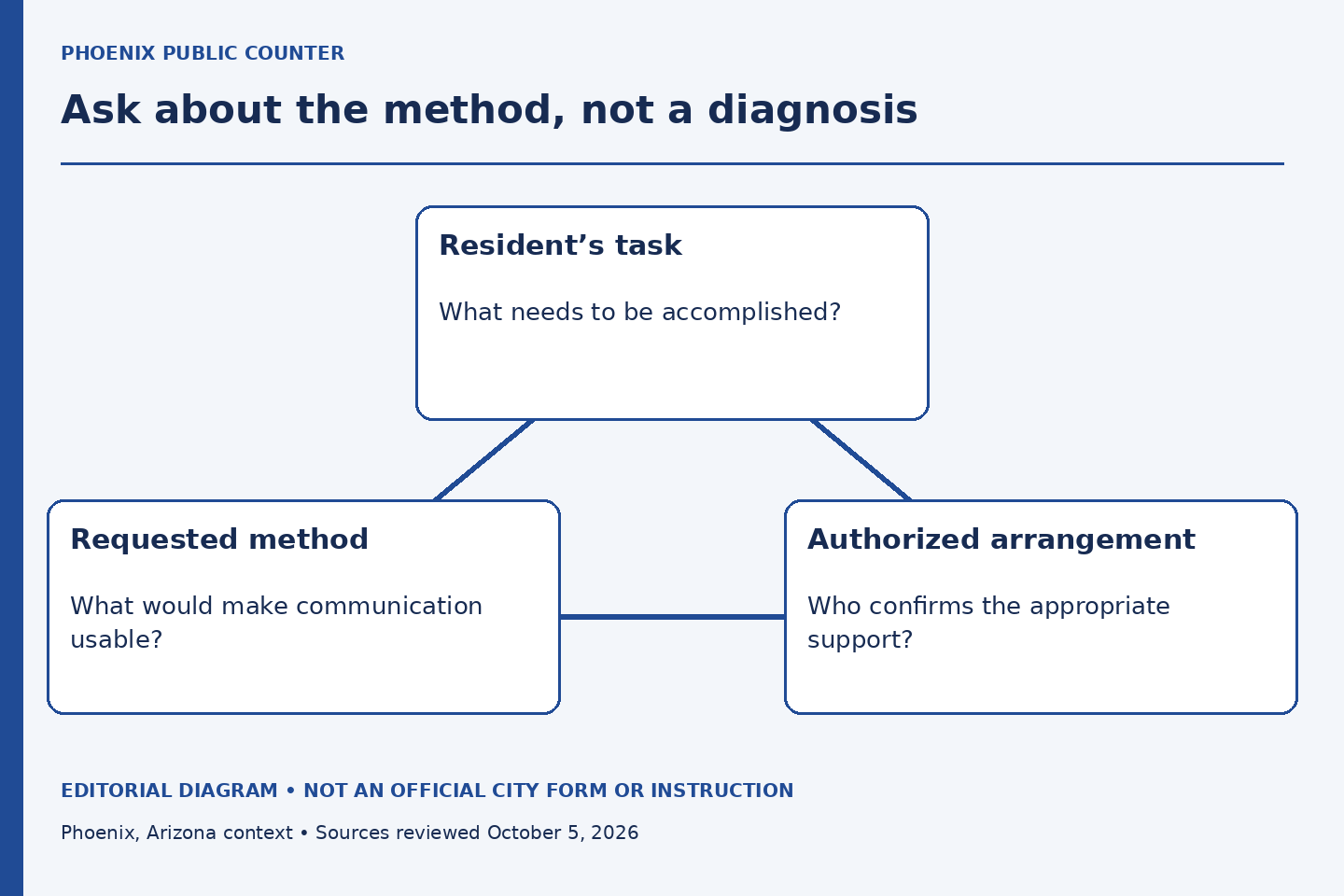
A communication-support request can be handled respectfully without asking a resident to explain a diagnosis at a public counter. The employee's practical question is what arrangement will make the service interaction usable and how to obtain it through the approved process. The person's private medical story is usually not the starting point for that conversation.
Use the requested method as information
If someone asks for a particular communication method, listen to the request rather than replacing it with what seems easier. Staff should follow the applicable process for arranging support and clarifying any service-specific requirements. This article cannot decide an accommodation or establish which aid is effective in an individual case.
Phoenix's Citywide Accessibility Resources page describes captioning and interpretation in public meeting contexts and identifies other departmental resources. Those examples show that communication access can take different forms. They are not a single instruction for every counter, appointment or employee interaction.
Practice an offer that preserves choice
In a fictional exercise, a resident indicates that hearing the spoken explanation is difficult. The staff participant can ask what communication arrangement would help and consult the approved route. They should not raise their voice indefinitely, speak only to a companion or assume that a written note resolves every need.
The observer checks whether the employee addresses the resident directly, avoids unnecessary personal questions and explains what is being arranged. A good offer should not sound like a favor that the person must earn by disclosing more about themselves.
Keep the service content accurate
Communication support changes how information is exchanged, not the need for accurate service information. Prepare the relevant page, document title or verified next step before the supported conversation begins. If the employee is unsure of the program answer, acknowledge that uncertainty rather than letting the support arrangement make the answer appear more authoritative.
Use manageable segments and allow time for the exchange. Do not rush to fill every pause. In practice, ask the person playing the resident to explain the next action they heard, so the group can assess the clarity of the staff explanation.
Know where the decision belongs
A frontline employee may need help from a supervisor, program coordinator or the official accessibility contact. Keep that route current and available. Do not promise a particular service or timing that has not been confirmed, and do not deny a request based on this independent article.
The useful learning outcome is a respectful, task-focused conversation that reaches the authorized arrangement. It is not a medical assessment, a compliance certificate or a test of whether the resident can manage without support.
Sources and limits
Official public sources checked October 5, 2026. Examples and exercises are original editorial illustrations, not City records or instructions.
- Citywide Accessibility Resources
Published accessibility resources across departments. Individual accommodations and legal obligations require authorized review.
- Equal Opportunity Department Contact
Official contact route for accessibility and equal-opportunity questions. This publication is not that department.