In this guide
A resident who returns to a counter has already invested time. Repeating the same instruction without asking what happened can make the service feel like a loop. The employee's first task is to understand the point where the earlier route failed, while avoiding blame toward the resident or a colleague whose interaction they did not observe.
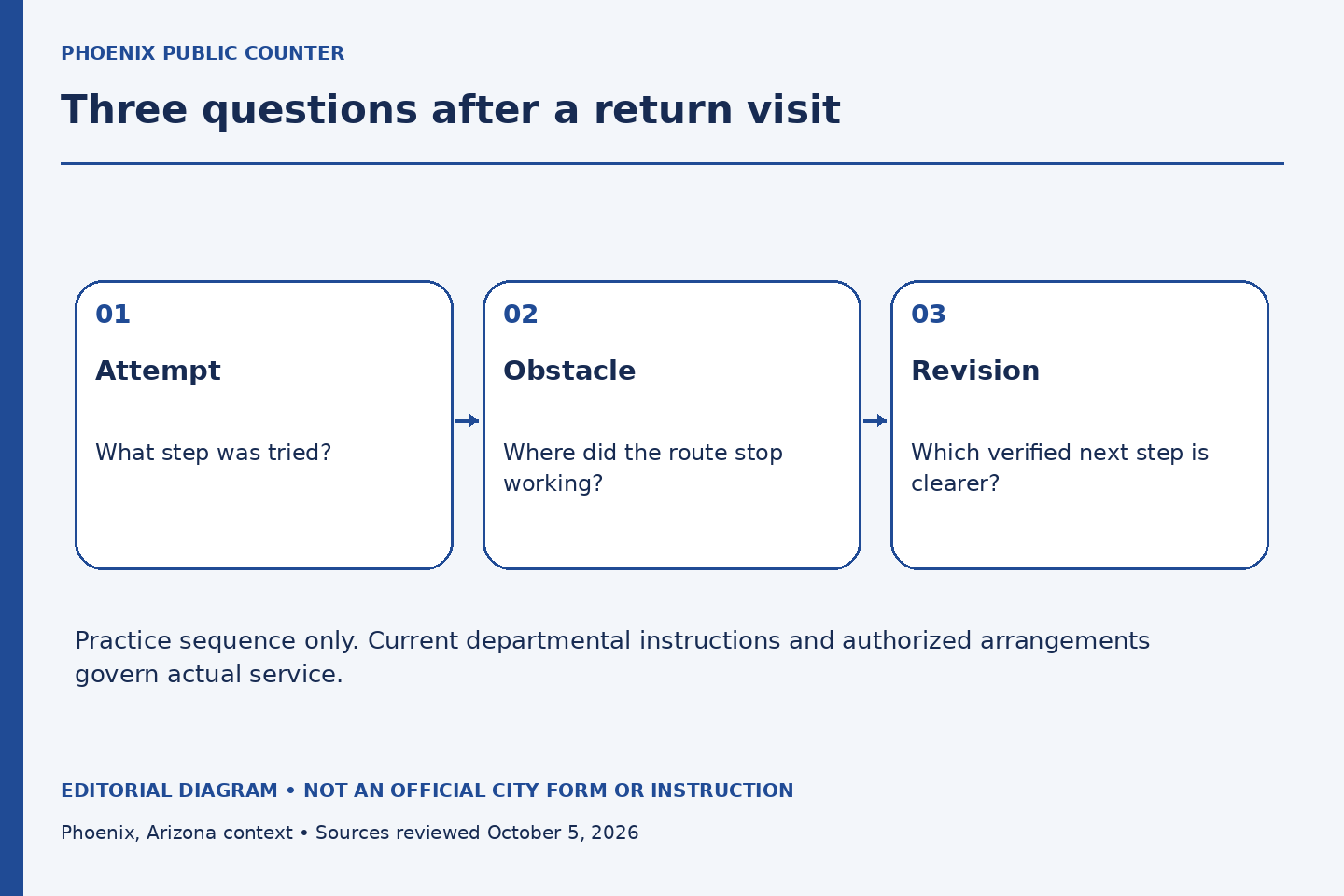
Ask about the attempted step
Invite the person to describe what they tried and what happened next. Keep the question practical: which office, page or action was involved? Do not demand a perfect retelling or imply that the resident must have misunderstood. The purpose is to locate the obstacle, not assign fault.
In a fictional Phoenix neighborhood-program exercise, a resident says they called the number on a handout but did not reach the expected service. The staff participant checks the current official route and the handout's date. They do not assume that the person dialed incorrectly or that the named office refused help.
Separate three possible gaps
The information may have been outdated, the explanation may have been unclear, or the route may not have matched the task. Other explanations are possible, but these three help structure a rehearsal. Each suggests a different staff response: verify the source, revise the explanation or identify the correct service.
Phoenix's public participation and accessibility resources illustrate the importance of service-specific information and communication arrangements. They do not establish what occurred in an individual return visit. A real case should be handled under the department's authorized process and records rules.
Acknowledge the inconvenience without inventing a promise
An employee can recognize that the person had to return and focus on making the next step clearer. They should avoid promising an exception, a same-day outcome or a response from another office that has not been confirmed. Reassurance is most useful when attached to an action the employee can actually take.
For practice, ask the participant to explain the verified route in one or two steps and state what remains uncertain. The observer listens for whether the new explanation differs meaningfully from the old one. Simply speaking more slowly does not fix an incorrect destination.
Learn from the pattern through the right channel
If repeated visits reveal a recurring information problem, raise it through the approved team process. Use the minimum necessary detail and protect resident privacy. A training note can describe the confusing instruction without copying a real case file.
The useful outcome is both immediate and longer term: a better next step for the person and a specific issue the team can review. The return visit becomes evidence about the service explanation, rather than a reason to label the resident difficult.
Sources and limits
Official public sources checked October 5, 2026. Examples and exercises are original editorial illustrations, not City records or instructions.
- Citywide Accessibility Resources
Published accessibility resources across departments. Individual accommodations and legal obligations require authorized review.
- Your Voice: Citizen Notification and Participation
Public participation and department language-assistance information; does not establish citywide service availability.